Thursday, February 20, 2014

Sharks are Friends not Food


Shark fin soup
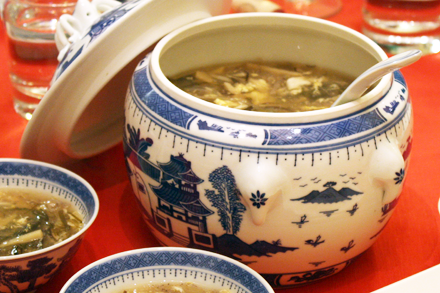
Shark fin soup is the number one reason sharks are killed. This soup has been a delicacy in Asian countries, particularly China, since the Sung Dynasty (968 AD) (Shark Truth 2014). It is frequently served at weddings, new year’s parties, and other large celebrations (Lo 2012). This ancient tradition causes many Asian communities look down upon people who do not eat shark fin soup. The soup shows a status of wealth and prosperity, and not eating it is disrespectful towards hosts who provide it (Shark Truth 2014). Texture is the only reason shark fins are used in this soup other than their status as one of the “Big Four,” the four most valuable types of seafood in China (Shark Truth 2014). There are three other valuable types of seafood which include abalone, sea cucumber, and fish maw (Shark Truth 2014). In recent years the brutality of shark finning has become more public. Alternatives to shark fin soup have been created, which maintain the same texture and flavor without the fin (Lo 2012).
Map of states in the US that serve shark fin soup


Although the origins of this soup are in China, it has spread to be a worldwide dish. Shark fin soup is served in many places in the United States. Currently, there are 31 states that offer shark fin soup, even some of those that have a ban placed on shark finning and possession of shark fins (AWI 2013). Some restaurants in California and Oregon serve shark fin soup without the license to do so (AWI 2013). This causes a larger problem because many states and countries are ignoring or avoiding regulations set in place to prevent shark finning.


Works Cited:

AWI. (2013). Restaurants Currently Offering Shark Fin. Animal Welfare Institute. Animal Welfare Institute. (Date Accessed: February 19, 2014.) https://awionline.org/content/restaurants-currently-offering-shark-fin-soup#Top

Lo, B. (2012) Shark fin what’s all the fuss about? Youtube. Youtube. (Date Accessed: February 20, 2014.) http://www.youtube.com/watch?v=hLTQORmB9TY


Shark Truth. (2014). Shark Fin Trade. Shark Truth. Shark Truth. (Date Accessed: February 19, 2014.) http://www.sharktruth.com/learn/shark-finning/

Wednesday, February 19, 2014

Sharks: The Apex Predators of the Ocean


Aquatic food chain
Trophic Cascade
An apex predator is a carnivore that, in a specific environment, has few or no predators of its own (What Eats 2014). In the ocean, this is the shark. Sharks can feed on large animals without worrying about being attacked. This allows them to sit comfortably at the top of the food chain and in the center of the food web (What Eats 2014). When sharks are removed because of finning the rest of the ecosystem is thrown off balance, which is known as a trophic cascade. A trophic cascade causes population imbalance in other species in the ecosystem (Carpenter 2014). In this case, a decrease in the apex predators leads to an increase in the next trophic level, usually large mammals or fish, which are typically shark’s prey. The graphic on the right shows that with the removal of sharks, the next trophic level, seals, overpopulate and this destroys the lower trophic level. This pattern continues until the producer’s trophic level is either diminished or thriving. It is difficult to determine which level will vary because the number of trophic levels can vary in different ecosystems. It can be noted in both of the graphics that the ecosystem has a very fragile balance, and that every species from sharks to phytoplankton relies on the other to keep this in check. The removal of the apex predator can reshape the entire environment from top to bottom (Carpenter 2014). If we are not careful the lack of sharks will disrupt the natural order of the ocean.

Works Cited:

Carpenter, S. (2014) Trophic Cascade. Encyclopaedia Britannica. Encyclopaedia Britannica. (Date Accessed: February 20, 2014.) http://www.britannica.com/EBchecked/topic/1669736/trophic-cascade.
  
What Eats. (2011) Apex Predators. What Eats? What Eats? (Date Accessed: February 20, 2014.) http://www.whateats.com/?s=shark.

Tuesday, February 18, 2014

Shark Fin Soup: The Healthy Choice?

Doctors and medical experts are people who oppose the shark fin trade for purely health reasons. Health organizations and doctors have often warned against the consumption of shark fin soup. Though many believe that shark fin soup can improve health, fight cancer, and prevent heart disease, new research suggests just the opposite (The Telegraph 2011). Eating shark fin soup can be hazardous to human health, as sharks tend to contain mercury due to excessive pollution in the water (Shark Savers 2014). Specifically, sharks contain high levels of methylmercury, which is classified as a neurotoxin (Shark Savers 2014). In fact, the United States Environmental Protection Agency has warned against the consumption of shark fin soup for small children and women, as the toxin is known to cause infertility (Shark Savers 2014). Also, shark fins contain BMAA, which is another neurotoxin that has been linked to Alzheimers disease and Lou Gehrig disease or ALS (Science Daily 2012).

Before serving shark fin soup, some restaurants treat shark fins with hydrogen peroxide in order to make their color more appealing to consumers (Stop Shark Finning 2013). Though the concentration is normally diluted, hydrogen peroxide can cause nausea and, in some cases, a stroke (Nutrition Facts 2014). The health risks of consuming shark fin soup far outweigh the supposed benefits, and doctors believe that it is in the best interest of patients to avoid consumption of the dish.
Effects of Mercury

Works Cited:

Nutrition Facts. (2014) Can you take hydrogen peroxide internally? Nutrition Facts. Nutrition Facts. (Date Accessed: February 20, 2014.) http://nutritionfacts.org/questions/can-you-take-hydrogen-peroxide-internally/.

Science Daily. (2012) Neurotoxins in shark fins: A human health concern, 
Science Daily. Science Daily. (Date Accessed: February 20, 2014.) http://www.sciencedaily.com/releases/2012/02/120223182516.htm.

Shark Savers. (2014) Shark Fin Soup Is Not Healthy. I’m Finished with Fins. SharkSavers, Inc. (Date Accessed: February 20, 2014.) https://www.sharksavers.org/en/our-programs/i-m-finished-with-fins/learn-more/shark-fin-soup-is-unhealthy/.

Stop Shark Finning. (2013). Shark fin soup facts. Stop Shark Finning. Stop Shark Finning. (Date Accessed: February 19, 2014.) http://www.stopsharkfinning.net/shark-fin-soup-facts/


The Telegraph. (2011) Shark fin soup prized as a cure-all. The Telegraph. Telegraph Media Group Limited. (Date Accessed: February 20, 2014.) http://www.telegraph.co.uk/news/worldnews/northamerica/usa/8746046/Shark-fin-soup-prized-as-a-cure-all.html.


Sunday, February 16, 2014

Shark Fin Soup: A Cultural Norm


In Asian cultures, particularly China, the practice of shark finning is not problematic, as it is necessary in order to serve shark fin soup as a symbol of wealth and status. Shark fin soup is especially a symbol of generosity among older generations(Shark Truth 2014). These generations are filled with people who immigrated to various countries, such as the United States, in pursuit of a better life. Though many of these people fell on difficult economic times at the begin of their lives, affording and providing shark fin soup for their families at special events is also a symbol of pride. Not only is it thought to promote wealth, but shark fin soup has supposed health benefits, and many believe that it has the ability to increase lifespan (Schneider 2011). Shark fin soup is not viewed as problematic, especially by older generations in China. Thus the shark fin trade is not inhumane or troublesome, as it facilitates a centuries-old tradition.

Traditional Shark Fin Soup


Works Cited:


Schneider, A. (2011) Shark Fin Soup: War of Culture, Politics, Business. Food Safety News. Food Safety News. (Date Accessed: February 20, 2014.) http://www.foodsafetynews.com/2011/06/shark-fin-soup-a-cultural-war-environmental-nightmare-and-multi-million-dollar-business/#.UwdS20JdWUB


Shark Truth. (2014). Shark Fin Trade. Shark Truth. Shark Truth. (Date Accessed: February 19, 2014.) http://www.sharktruth.com/learn/shark-finning/

Saturday, February 15, 2014

Shark's Best Friends: The Conservationist and Activist Perspective


People Against Shark Finning
Conservationists and activists strongly disagree with the practice of shark finning for several reasons. First and foremost, shark finning is an inhumane practice. Once caught, sharks’ bodies are not used efficiently, as only the fin is severed from the body while the rest of the shark is thrown back into the ocean to drown or to be eaten by fish (Stop Shark Finning 2013). Also, shark finning can lead to ecological disasters. Due to the growing popularity of shark finning, particularly in Asian waters, sharks are not able to reproduce as fast as they are being hunted, which could lead to extinction. According to The International Union for the Conservation of Nature, approximately one in three sharks are threatened by that fate (PETA 2012). Following the extinction of sharks, the entire ecosystem of the ocean would be thrown off-balance. Sharks are considered apex predators, meaning that they are at the top of the food chain. Sharks control overpopulation of their prey, such as fish, and if extinct, they would not be able to maintain the very delicate balance (Shark Water 2012). The goal of a conservationist focuses on the preservation the diversity of an ecosystem, and animal activists wish to protect all species from unnecessary harm. Shark finning threatens both of these practices, as it not only puts sharks at risk, but it endangers an entire ecosystem. In order to prevent this, many activist organizations, including People for the Ethical Treatment of Animals (PETA) are encouraging people not to buy the soup and spread the message (PETA 2012).


Works Cited:

PETA. (2012) ‘Free the Sharks’ Week 2012. PETA.
 PETA. (Date Accessed: February 20, 2014.) http://www.peta.org/features/free-sharks-week-2012/.

Stop Shark Finning. (2013) Shark Fin Soup what’s the scoop? Stop Shark Finning.
 Stop Shark Finning. (Date Accessed: February20, 2014.) http://www.stopsharkfinning.net/shark-fin-soup-whats-the-scoop/
Shark Water. (2012). Education Shark Finning Facts. Shark Water.
 Sharkwater Productions. (Date Accessed: February 19, 2014.) http://www.sharkwater.com/education.htm

Friday, February 14, 2014

Shark Finning is Destroying the Livelihood of Small-Scale Fishermen


Small-scale fishermen in Asian countries are one group of people that are very opposed to shark finning. Many fishermen around the world are falling on difficult economic times. In the commercial fishing business, fisherman must be able to catch a certain number of fish a day, otherwise they will not make a profit. They are unable to do so in some cases when there are not fish to catch. Some "artisanal" fisherman who choose to participate in the shark finning trade are also put into an unfair situation, as they are in competition with much larger finning vessels. For example, at the height of the shark fin trade, which was around 2005, there were upwards of 150 foreign and large-scale fisheries positioned in East Asia with the primary intention of participating in the shark fin trade (Shark Savers 2014). Also, Shark finning is not a sustainable industry. In both the case of a small-scale fisherman, and a small-scale "artisanal" fisherman, the large global shark fin trade is detrimental to their livelihood. For the small fisherman, the excessive hunting of sharks, and the resulting population boom of large mammals and fish, has led to a decrease in smaller fish that fishermen rely on to make a living. Also, for the "artisanal" fisherman, the large-scale fisheries make the shark fin industry unpredictable. For example, in 2005, after the industry started becoming wildly successful in some parts of the world such as West Africa, it declined by 50% over the following three years (Shark Savers 2014). Smaller fishermen, whether directly or indirectly impacted by the actions of large-scale fisheries, oppose the global shark fin trade, as it has been disastrous toward their livelihoods.
Small-Scale Shark Finning


Works Cited:


Shark Savers. (2014) Finning and the Fin Trade. Shark Savers. Shark Savers Inc. (Date Accessed: February 19, 2014.) http://tinyurl.com/kttsq9v.